






Blending Physical Displays with Digital Experiences in Bank Branches

The role of the bank branch is changing
For years, the conversation around bank branches has focused on decline. Yet while everyday transactions have moved online, physical branches continue to play an important role.
Today’s branches are spaces for guidance, reassurance and more complex conversations. Customers visit when they need clarity, confidence or human support. As a result, the way information is shared in-branch has become more important than ever.
This is where digital displays are making a real impact.
Why digital signage is becoming essential in banking environments
Bank branches handle a constant flow of information, from service updates and fraud alerts to promotional campaigns and financial education. Communicating all of this clearly, without overwhelming customers, is a growing challenge.
Bank digital signage helps solve this by making information flexible, timely and easy to manage. Unlike static printed materials, digital displays allow messaging to be updated instantly and rolled out consistently across multiple locations. This ensures customers see accurate, up-to-date information whenever they visit.
When used well, digital signage adds clarity, rather than clutter, to the banking environment. This improves the experience for your customers and staff alike.
"Almost half of financial institutions feel that digital signage has improved their sales by up to 40%" [1]
Different types of digital displays used in bank branches
Not all digital displays serve the same purpose. Modern bank branches often use a mix of screen types, each supporting a different stage of the customer journey.
Wall-mounted screens are commonly used to share high-level information. These displays are ideal for service updates, fraud prevention messages, queue guidance or awareness campaigns. Positioned at eye level, they communicate clearly without taking up valuable floor space.
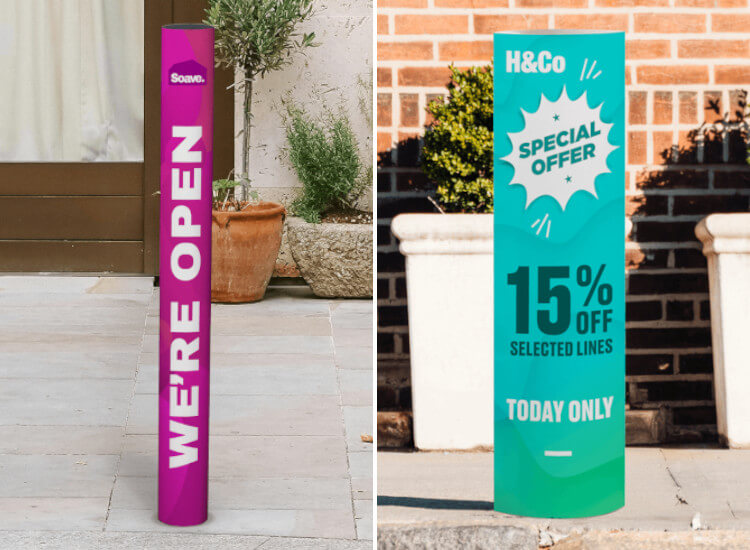
Digital totem signs are frequently placed in entrance areas or high-traffic zones. Their freestanding format makes them well suited for welcoming customers, highlighting key services or promoting current offers. Totems work particularly well where banks want information to be visible from a distance and easy to digest at a glance.

Some branches also use digital screens with inbuilt brochure holders, creating a more engaging and practical display. Customers can view an overview on screen, then take printed information away with them to read later. This blended approach works especially well for mortgages, savings products or business banking services, where customers often need time to consider their options.
-



Digital Display Totem
DDT In stockFrom: £995.00 ex. VATView -

Touchscreen Digital Display Totem
DDV In stockFrom: £1,350.00 ex. VATView -


Digital A Board 43"
DAB02 In stockWas: £941.75 From: £875.00 ex. VATView
Supporting independence with touchscreen displays
Touchscreen digital displays are becoming increasingly popular in modern branches. These allow customers to explore information independently, without needing immediate assistance from staff.
Touchscreens can be used to:
- Browse services and products
- Learn about financial options at their own pace
- Access FAQs or educational content
- Prepare for appointments before speaking to an advisor
For customers who prefer self-service, or who may feel hesitant asking questions, touchscreen displays offer a more comfortable and empowering experience.
Creating balance between digital and physical communication
While digital displays bring flexibility, they work best when combined with physical signage and printed materials. Static displays still provide structure and reassurance, anchoring key information within the space.
The most effective branches use physical displays for long-term or compliance-related information, while digital signage handles updates, campaigns and interactive content. This balance keeps the environment calm, organised and easy to navigate.
Designing branches that can adapt over time
As customer expectations continue to evolve, flexibility is becoming essential. Digital displays allow banks to update messaging quickly without redesigning entire spaces, while modular display systems make it easy to adapt layouts as services change.
Instead of needing frequent refits, banks can evolve their branches gradually, staying modern, relevant and customer-focused.
"Digital signage for banks has led to up to a 35 percent reduction in perceived wait times" [2]
A clearer future for in-branch communication
The future of the bank branch is about using both digital and physical communication intelligently, to create a holistic experience where the customer feels informed and catered to.
By combining well-designed physical displays with thoughtfully implemented bank digital signage, financial institutions can create spaces that feel modern without losing reassurance, efficient without feeling impersonal. The result is clearer communication, more confident customers, and branch environments designed for the way people bank today.
If you enjoyed this article...↗
Check out our Banking and Finance Hub for more guides and insights...
-


High Brightness Display Screen for Shop Windows
DDUH In stockFrom: £1,790.00 ex. VATView -

Universal Tablet Floor Stand
TAB10 In stockFrom: £97.00 ex. VATView -

Universal Countertop Tablet Stand
TAB11 In stockFrom: £80.47 ex. VATView
References
1. Alisa Semyekhina, ‘20 digital signage statistics every credit union marketer and retail leader should know’ (February 28, 2023), CUInsight, https://www.cuinsight.com/20-digital-signage-statistics-every-credit-union-marketer-and-retail-leader-should-know/
2. J.P. Pressley, ‘Why Banks Are Embracing Digital Signage Solutions’ (Jul 07 2023), BizTech Magazine, https://biztechmagazine.com/article/2023/07/why-banks-are-embracing-digital-signage-solutions