



The Psychology of Property Advertising: What Makes Buyers Stop and Look

Walk down any main street and you’re bound to see estate agent windows filled with property listings. Yet only a handful truly capture attention. Some displays stop people in their tracks, while others fade into the background, barely noticed.
So what makes the difference?
Behind every successful property advert is a subtle blend of psychology, design, and presentation. Understanding how buyers think, move, and respond to visual information can help your estate agency turn casual passersby into serious enquiries. Let’s explore what really makes buyers stop, look, and take action...
First Impressions Happen in Seconds
Research shows that people form first impressions in just a few seconds. When someone walks past your branch, they are subconsciously deciding almost instantly whether your window is worth their time.
If your display looks cluttered, outdated, or poorly lit, the brain interprets this as low value. On the other hand, a clean, organised, and professional-looking window signals trust, quality, and competence.
This is why well-structured display systems are so important. Cable and rod display systems, which remain the most commonly used window displays for estate agents, help create tidy, evenly spaced layouts that feel intentional and premium.
Instead of random posters stuck to glass, properties appear curated and easy to browse.

That visual order reassures buyers before they even read a single detail.
The Power of Visual Hierarchy
When people look at a window display, their eyes don’t scan everything at once. They follow a natural pattern, usually starting at eye level and moving across in a loose “Z” shape.
The most desirable listings, flagship developments, or key promotions should always be positioned in prime viewing areas. Using poster holders, cable displays, or digital screens allows you to control this visual hierarchy.
By guiding attention deliberately, you help buyers find something relevant quickly. This reduces mental effort and increases the chance they’ll stay longer at your window. And the longer someone looks, the more emotionally invested they become.
Emotional Triggers: Selling a Lifestyle, Not Just a Property
Buying a home is rarely a purely logical decision. It’s emotional. People aren’t just buying bricks and mortar, they’re buying a future, a lifestyle, and a sense of belonging.

High-quality photography plays a huge role here. Bright interiors, natural light, tidy gardens, and attractive surroundings activate positive emotions. When these images are displayed clearly in professional poster frames, or suspended neatly in cable and rod systems, they feel more aspirational.
Large, well-presented visuals help viewers imagine themselves living there. That moment of imagination is powerful. Once it happens, curiosity quickly turns into enquiry.
Simplicity Reduces Cognitive Overload
Too much information overwhelms the brain. If your window is packed with tiny text, overlapping posters, and mixed messages, viewers subconsciously disengage.
Psychologists call this “cognitive overload”. When faced with too many choices or too much effort, people choose to walk away.
Minimalist displays tend to perform better. Fewer listings, presented clearly, feel easier to process. This is where modular display systems excel. They allow agents to refresh layouts regularly, remove outdated properties, and keep everything aligned.
Digital signage also supports this principle by rotating content automatically, displaying only a few properties at a time rather than everything at once.
Less clutter means more attention to what matters!
-

LED Cable Kit Window Display
KBL In stockFrom: £93.01 ex. VATView -

Premium Magnetic LED Window Display Cable Kit
PKBL In stockFrom: £93.01 ex. VATView -

Ceiling to Floor Cable Poster Kit
KB1 In stockFrom: £19.75 ex. VATView -

Wall Mounting Cable Poster Kit
KB2 In stockFrom: £44.44 ex. VATView
Trust Signals and Professionalism
Buyers are highly sensitive to signs of credibility. Small details matter more than most agents realise.
A faded poster, crooked display, or peeling tape can quietly undermine trust. It suggests lack of care, which buyers may subconsciously associate with service quality.
In contrast, well-maintained cable and rod displays, neat leftlet displays, sturdy poster holders, and modern digital screens communicate professionalism. They show that the agency invests in its image and takes pride in presentation.
This builds confidence before any conversation even begins.
"The application of dynamic or interactive elements in window displays has been found to be an effective way to optimize customer draw and interaction." [1]
Movement and Light Capture Attention
Human brains are wired to notice movement. It’s an evolutionary survival mechanism, and it still works today on the high street.
Digital signage takes advantage of this instinct. Subtle transitions, slideshows, and video tours naturally draw the eye. Even slight motion is enough to break through visual “noise” from surrounding shops.
Lighting also plays a major role. Bright, evenly lit displays appear more inviting and premium. Illuminated poster frames and backlit displays make property images stand out in the evening and during darker months, extending your advertising power well beyond office hours.
A well-lit window is essentially a 24/7 salesperson.
Consistency Builds Brand Recognition
Repetition breeds familiarity, and familiarity builds trust.
When your displays follow a consistent layout, colour scheme, and structure, people begin to recognise your brand subconsciously. Over time, this recognition makes your agency feel established and reliable.
Using uniform indoor and outdoor signs, aligned cable systems, and consistent digital templates helps reinforce this visual identity. It transforms your location from a random collection of listings into a branded marketing asset.

This is especially important in competitive high streets where multiple agencies operate side by side.
The “Pause Point” Effect
One of the most important goals of any window display is creating a pause point. This is the moment when someone slows down or stops walking.
Once they pause, you’ve won half the battle.
Clear layouts, strong imagery, balanced spacing, and prominent pricing all contribute to this effect. Pavement signs can also play a supporting role, drawing attention toward the window and guiding foot traffic inside.
Well-designed displays act like visual magnets, encouraging people to linger rather than rush past.
Turning Attention into Action
Stopping and looking is only the first step. The ultimate goal is to generate enquiries.
Effective displays always include subtle prompts to act. This might be a clearly visible phone number, website address, QR code, or “Book a Viewing” message.
When these elements are integrated cleanly into poster holders or digital signage layouts, they feel helpful rather than pushy. The easier you make it for someone to take the next step, the more likely they are to do so.
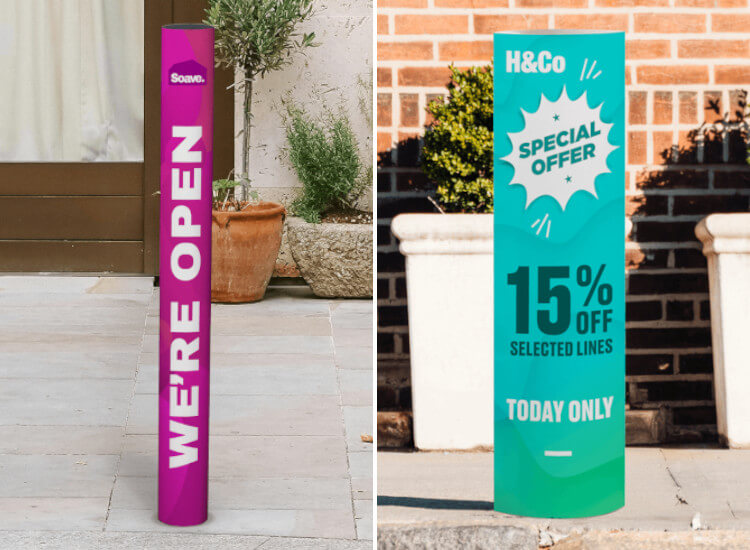
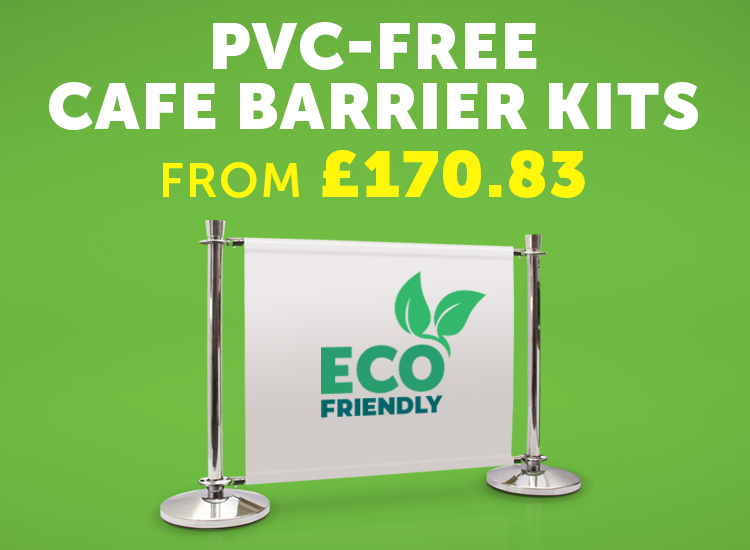
Tip: Dont limit promotional material to your in-branch displays. Displaying outdoor banners in strategic locations can increase brand visibility and awareness.
"Strategic outdoor placements in urban cores provide essential visual reinforcement." [2]
Why Display Systems Matter More Than Ever
In a digital-first world, physical displays remain incredibly powerful, especially for estate agents. Your shopfront is one of the few marketing channels that reaches highly local, motivated buyers every day.
Cable and rod display systems remain the industry standard for good reason. They are flexible, tidy, and visually lightweight, allowing properties to “float” in the window without blocking light. Combined with poster holders, illuminated frames, and digital signage, they form the backbone of modern property advertising.
Together, these tools allow agencies to adapt quickly, test new layouts, and maintain a professional presence year-round.
Check out our Estate Agents Hub ↗
for more guides and insights...
Final Thoughts
Great property advertising is about understanding how people think, feel, and behave.
By creating clear visual hierarchies, appealing to emotion, reducing clutter, and investing in professional display systems, estate agents can transform their windows into powerful psychological marketing tools.
When buyers stop, look, imagine, and trust, enquiries naturally follow. And it all starts with how you present your properties.
-


High Brightness Display Screen for Shop Windows
DDUH In stockFrom: £1,790.00 ex. VATView -

Double Sided Hanging LED Backlit Snap Frame
HLED In stockFrom: £153.61 ex. VATView -


Countertop Tiered Leaflet Holders
CD9 In stockFrom: £3.49 ex. VATView -

A4 Poster Holder with Leaflet Dispenser
SD4 In stockFrom: £6.77 ex. VATView -

Acrylic Wall Mounted Panel Poster Kit
WMP In stockFrom: £12.34 ex. VATView -

LED Illuminated Poster Kit Wall Mounted
WML In stockFrom: £71.59 ex. VATView -


Outdoor Banner With Eyelets
BNR In stockFrom: £16.00 ex. VATView -

Freestanding Digital Signage with Brochure Holder
DDB In stockFrom: £777.99 ex. VATView
References
1. Roba Anjum, ‘Visual Merchandising Mastery: Evaluating the Efficacy of Window Displays in Customer Attraction’ (June 2025), Green Lifestyle and International Market 2(1):20-30
2. ‘Real Estate Beat: Urban Property Young Professional Marketing’ (Jan 26, 2026), https://www.media.co.uk/blogs/blog/real-estate-beat-urban-property-young-professional-marketing